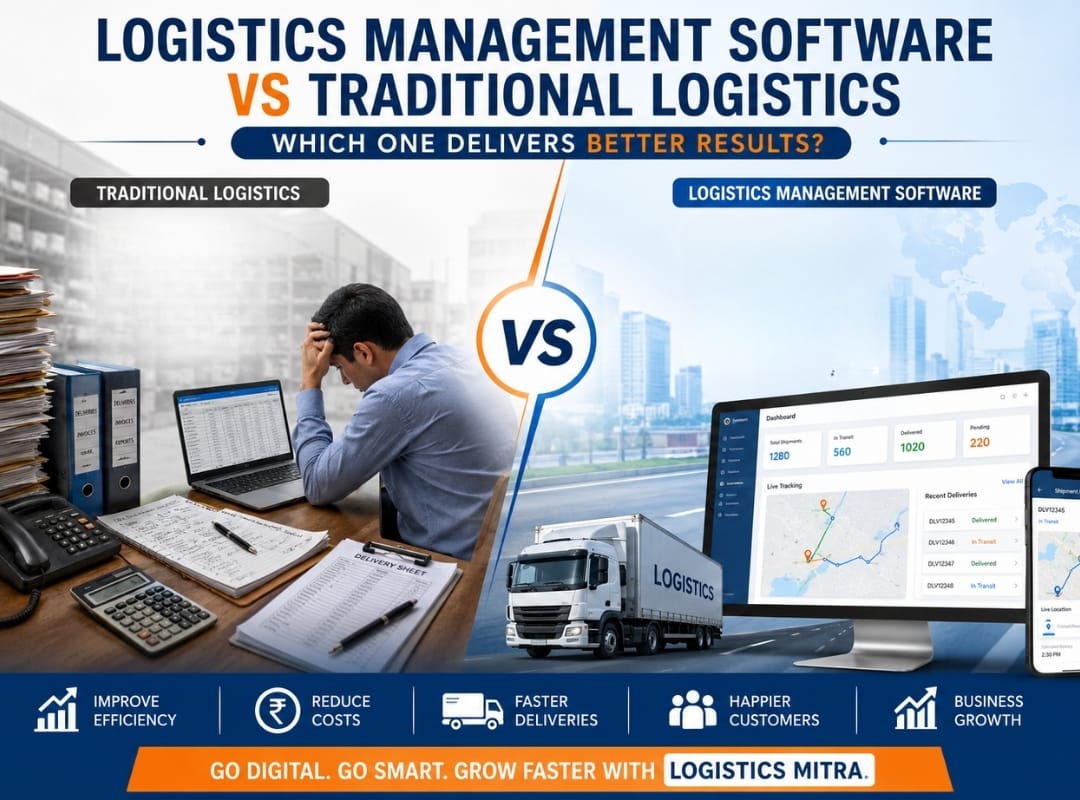
Running a logistics business is not as easy as it was a few years ago. Today, customers expect faster deliveries, real-time updates, and excellent service. At the same time, fuel prices are increasing, delivery routes are becoming more complex, and businesses need better ways to manage their operations. Many companies still use traditional methods like spreadsheets, phone calls, paper records, and manual planning to handle logistics. While these methods have worked for years, they often create delays and make it difficult to manage growing business operations. This is where Logistics Management Software makes a big difference. A modern Logistics Management System helps businesses automate daily tasks, track shipments in real time, reduce errors, and improve overall efficiency. But which one delivers better results—traditional logistics or Logistics Management Software? Let’s compare both in detail and understand which solution is better for today’s businesses. What is Traditional Logistics? Traditional logistics is the old way of managing transportation and deliveries. In this method, businesses depend on manual work to handle their operations. Employees usually manage everything using paper documents, Excel sheets, phone calls, emails, and WhatsApp messages. Some common tasks include: Recording shipment details manually Calling drivers for delivery updates Planning delivery routes by experience Maintaining paper invoices Tracking deliveries through phone calls Preparing reports manually This method works well when a business handles only a few shipments every day. However, as the number of orders increases, managing everything manually becomes difficult. Employees spend more time updating records than solving customer problems. Small mistakes can also create big issues. For example: Wrong delivery addresses Missed deliveries Duplicate entries Lost paperwork Billing mistakes Delayed customer updates These problems can reduce customer satisfaction and increase operational costs. What is Logistics Management Software? Logistics Management Software is a digital solution that helps businesses manage their complete logistics operations from one platform. Instead of using multiple spreadsheets and paperwork, businesses can manage everything through a single dashboard. A Logistics Management System helps companies handle: Shipment planning Vehicle allocation Driver management Route planning Live GPS tracking Delivery updates Digital Proof of Delivery (POD) Billing Reports and analytics The biggest advantage is automation. Instead of spending hours doing repetitive work, the software performs many tasks automatically. This saves time and allows employees to focus on more important work. Solutions like Logistics Mitra are designed to simplify logistics operations while improving speed, visibility, and customer satisfaction. Traditional Logistics vs Logistics Management Software Let’s understand the difference with a simple comparison. Feature Traditional Logistics Logistics Management Software Planning Manual Automated Shipment Tracking Phone Calls Live Tracking Records Paper Files Digital Records Billing Manual Automatic Reports Prepared Manually Generated Instantly Route Planning Experience-Based Smart Route Planning Communication Calls & WhatsApp Central Dashboard Error Chances High Very Low Business Growth Difficult Easy to Scale Customer Updates Slow Real-Time Notifications Looking at this comparison, it becomes clear that software helps businesses work faster and smarter. 1. Easy Shipment Management Managing shipments manually can be stressful. Employees have to write shipment details, call transporters, check delivery status, and update customers regularly. When there are hundreds of shipments every day, this process becomes very difficult. A Logistics Management Software keeps all shipment information in one place. Managers can quickly check: Shipment status Pickup details Delivery location Driver information Expected delivery time Everything is available within a few clicks. This saves time and improves productivity. 2. Better Visibility of Deliveries One of the biggest problems in traditional logistics is not knowing where the shipment is. Customers often ask: “Where is my order?” Employees then start calling drivers to find the latest update. This process takes time. A Logistics Management System provides real-time shipment tracking. Businesses can instantly see: Current vehicle location Delivery progress Estimated arrival time Delivery completion Customers also receive faster updates, improving their overall experience. 3. Less Manual Work Traditional logistics depends heavily on paperwork. Employees spend hours entering data into Excel sheets and preparing reports. This repetitive work reduces productivity. With Logistics Management Software, many tasks become automatic. For example: Trip creation Invoice generation Driver assignment Shipment updates Delivery confirmation Automation reduces workload and allows employees to focus on business growth. 4. Fewer Human Errors Manual work always carries the risk of mistakes. Some common errors include: Wrong customer details Duplicate invoices Missing shipment records Incorrect billing Delivery delays Even a small mistake can affect customer trust. A Logistics Management System reduces these risks by storing all information digitally. Since the software automates many processes, the chances of errors become much lower. Businesses can deliver better service with greater accuracy. 5. Faster Decision Making Every business owner wants to make smart decisions. But good decisions need good data. Traditional logistics usually provides very limited information. Managers often rely on guesswork because reports are created manually and may not be updated. A Logistics Management Software provides detailed reports in just a few seconds. Managers can easily check: Number of completed deliveries Pending shipments Vehicle performance Driver efficiency Delivery delays Revenue reports These insights help businesses identify problems quickly and improve operations. 6. Better Customer Experience Customer satisfaction plays a very important role in every business. Today’s customers don’t just want their products delivered—they also want regular updates and accurate delivery timelines. With traditional logistics, customers often need to call customer support to ask about their shipment. This increases the workload for your support team and may leave customers frustrated. A Logistics Management System improves this experience by providing real-time shipment updates, faster responses, and better communication. As a result, customers feel more confident and are more likely to return for future business. 7. Save More Money with Better Planning One of the biggest goals of every logistics company is to reduce transportation costs while maintaining fast and reliable deliveries. In traditional logistics, businesses often spend more money because of poor planning. Drivers may take longer routes, vehicles may not be fully loaded, and delays can increase fuel consumption. Over time, these small problems add up and affect the company’s profits. A Logistics Management Software