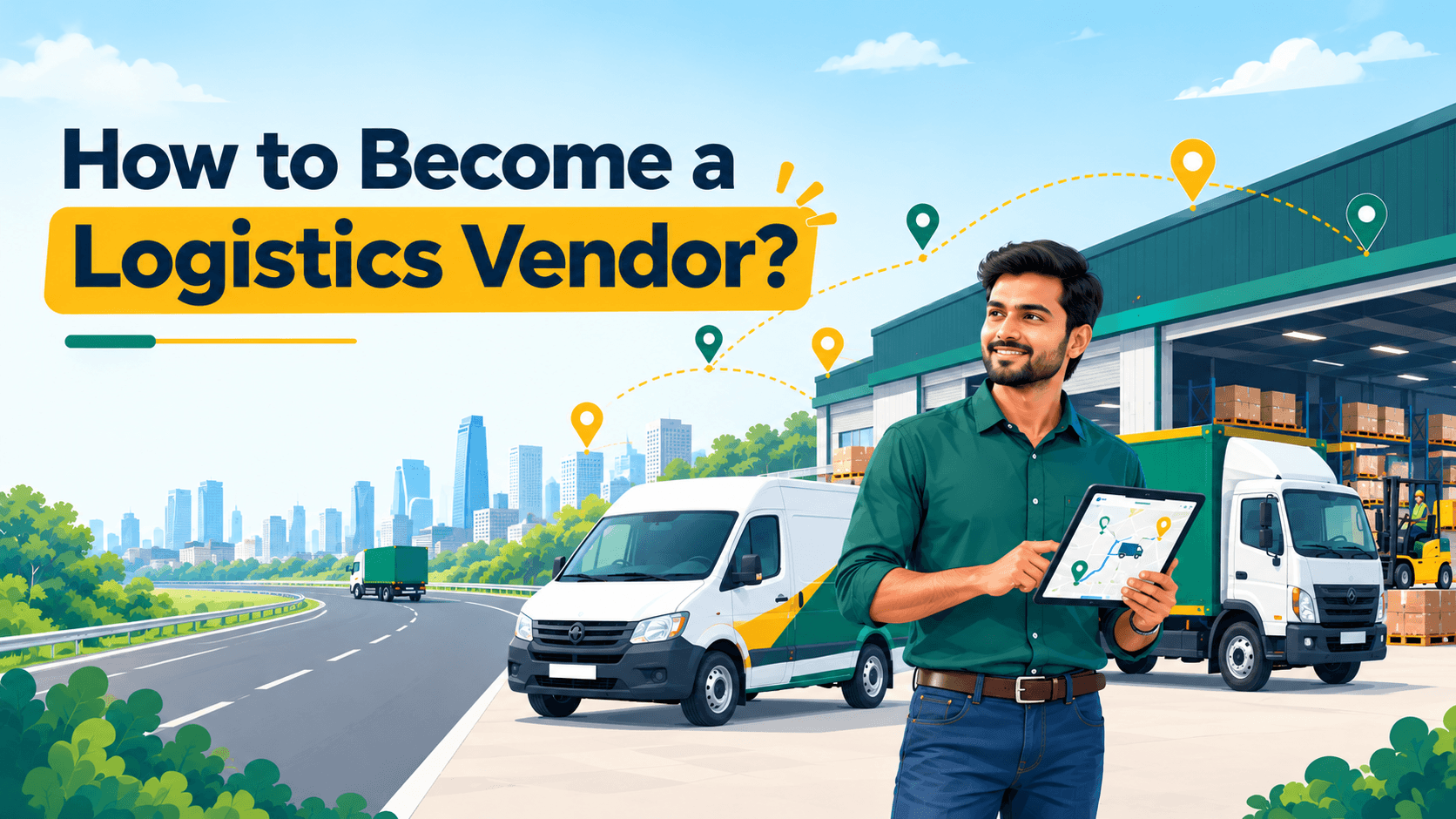
Have you ever wondered how a parcel reaches your home? Or how goods reach the shops in your area? The answer is simple. A logistics vendor moves them.
Big companies do not deliver everything on their own. They take help from small businesses that own trucks, vans, bikes or warehouses. These helpers are called logistics vendors. And companies always need more of them.
I have worked with logistics businesses for more than 10 years. I have seen people start with just one small vehicle and grow to 40 or more. They did not have any secret trick. They just learned the process, kept their papers ready, and delivered on time.
In this guide, you will learn how to become a logistics vendor step by step. We will keep it simple and easy to follow.
What Is a Logistics Vendor?
A logistics vendor is a person or business that helps other companies move, store or deliver their goods. You do not sell the product. You only help it reach the right place.
Here is an easy example. An online shopping app promises next-day delivery in a small town. But the app does not own a van there. A local vendor does the delivery for them. The app gives the work and pays for each parcel or trip.
When a company adds you to its list of approved helpers, it is called vendor empanelment or vendor onboarding. After that, you can get regular work from them.
Why Is This a Good Time to Start?
Here are some simple reasons:
- More people shop online. Even small towns now order a lot online. Companies need local helpers who know the roads.
- Companies like to outsource. Buying trucks and hiring drivers is costly. Most companies would rather pay a good vendor.
- The government supports logistics. Plans like India’s National Logistics Policy and PM Gati Shakti aim to make transport cheaper and better.
- You can start small. One vehicle, a small storage space, or even no vehicle at all is enough to begin.
- Steady income. Once a company approves you, work often continues for a year or more.
The demand is real. The people who succeed are the ones who prepare well. Let’s see how.
Types of Logistics Vendors: Choose One First
Logistics has many parts. Do not try to do everything at once. Pick one type, become good at it, and then grow.
| Type of vendor | What you do | Who gives you work | What you need to start |
|---|---|---|---|
| Last-mile delivery partner | Take parcels from a hub to people’s homes | Online shopping apps, courier companies | Bikes or small vans, delivery boys, a small hub |
| Truck transporter (FTL / PTL) | Carry full or half truckloads from one city to another | Factories, traders, distributors | Trucks (your own or rented), drivers, permits |
| Warehouse vendor | Store goods, then pack and send them | Online brands, sellers | Storage space, racks, staff |
| Freight broker | Find trucks for companies and earn a commission | Exporters, small businesses | Phone, office, contacts with truck owners |
| Cold chain vendor | Move or store goods that must stay cold | Medicine, milk and frozen food companies | Cold vans or cold rooms |
| Line-haul vendor | Run fixed routes between big hubs | Courier and delivery companies | Bigger trucks, regular drivers |
My advice: If you have little money, start as a delivery partner or freight broker. If you already have vehicles or land, try transport or a warehouse. They usually earn more.
How to Become a Logistics Vendor: 10 Easy Steps
Follow these steps in order. They will save you time and money.
Study your area
Before you buy any vehicle, go out and talk to people. Visit delivery hubs, transport markets, factories and warehouses near you. Ask them:
- Which routes need more vehicles?
- Which companies have delivery problems?
- Are they unhappy with their current vendors?
Their answers will show you where the work is.
Choose your business type
There are three common choices:
- Sole proprietorship: You run it alone. It is the easiest and cheapest way to start.
- Partnership or LLP: Good if a friend or partner is joining with money or vehicles.
- Private limited company: Best if you want big company or government contracts later.
Most people start alone and change to a company when the business grows.
Register your business
Companies will check your papers first. Without them, they will not work with you. In India, you usually need:
- GST registration, because companies need GST bills from you
- Udyam (MSME) registration, which is free and gives you some benefits
- PAN card and a bank account in your business name
- Shop and Establishment licence from your state
- Trade licence, if your city asks for it
If you want to send goods to other countries, you also need an Import Export Code (IEC).
Arrange your vehicles and space
You do not need to buy everything at once. You can:
- Buy a few vehicles for your main routes
- Rent or attach other people’s vehicles when work is high
- Rent a warehouse instead of buying land
Keep every vehicle’s papers ready: RC, insurance, fitness certificate, PUC and permits. Companies will check them.
Get insurance
If goods get damaged and you have no insurance, you could lose months of earnings. Get:
- Insurance for your vehicles
- Insurance for the goods you carry (goods-in-transit)
- Fire and theft insurance for your warehouse
- Insurance for your workers
Use simple technology
You do not need costly software. But you do need:
- GPS trackers in vehicles, so clients can see where their goods are
- A delivery app to give trips to drivers and record deliveries
- Billing software to make GST bills and e-way bills
Today, companies prefer vendors who can share live updates.
Build a good team
Your drivers and delivery staff represent your business. Check their licences and background. Teach them to handle goods with care and talk politely. Pay them on time. A loyal driver is worth more than a new truck.
Make a company profile
Make a short PDF of 4 to 6 pages about your business. Add your services, vehicles, areas you cover, registrations and team. Also make a simple website and a Google Business Profile, so companies can find you online.
Apply to companies
Now you are ready. Most big companies have a “Partner with us” or “Vendor registration” page on their website. You can apply to:
- Online shopping and courier companies that need delivery partners
- 3PL companies that give small routes to smaller vendors
- Factories and FMCG companies through their purchase team
- Government departments through the GeM (Government e-Marketplace) portal
The process usually goes like this: apply, send documents, they check your vehicles, you agree on rates, then you sign a contract. It can take a few weeks to a few months. So apply to many companies at once.
Start small and do great work
Your first contract may be a small trial. Treat it like an exam. Deliver on time, avoid damage, and solve problems quickly. If you do well, the company will give you more work. You can also show your good record to new clients.
Documents You Will Need
Keep scanned copies of these in one folder. You will need them again and again. Each company may ask for slightly different papers, so always check their list.
Business papers
- PAN card
- GST certificate
- Udyam (MSME) certificate
- Company or partnership papers (if you have them)
- Cancelled cheque and bank details
- Address proof of your office or warehouse
- Shop and Establishment or trade licence
Vehicle papers
- RC of each vehicle
- Vehicle insurance
- Fitness certificate and PUC
- Permits
- Driving licences of all drivers
- Goods and warehouse insurance (if needed)
Other papers
- Company profile
- Rate list
- Letters or orders from old clients
- Income tax returns (big companies may ask)
How Much Money Do You Need?
It depends on the type of work you choose. The numbers below are only a rough idea. Real costs change from city to city and with new or old vehicles.
| Type of business | Rough starting cost (INR) | Money mainly goes to |
|---|---|---|
| Freight broker | 50,000 to 2 lakh | Small office, registration, website, phone |
| Delivery partner | 2 lakh to 10 lakh | Bikes or a small van, hub rent, staff |
| Small truck business | 10 lakh to 40 lakh+ | Down payment on 1 to 3 trucks, permits, insurance, GPS |
| Small warehouse | 5 lakh to 25 lakh+ | Rent deposit, racks, equipment, staff |
| Cold chain | 20 lakh+ | Cold vans or cold rooms |
Two money-saving tips:
- Take a vehicle loan or rent vehicles instead of paying the full price at once.
- Keep 3 to 6 months of extra money ready. Many companies pay after 30 to 60 days. But fuel, salaries and loan EMIs must be paid every month. Running out of cash is the biggest reason new vendors fail.
How to Get Your First Clients
Papers help you get noticed. But good work and good relationships get you the contract. Try these:
- Work under a bigger company first. Big logistics companies often have more work than vehicles. Working for them helps you build experience.
- Start with local businesses. Shops, wholesalers and small factories in your city are easier to reach than big brands.
- Be visible online. Make a Google Business Profile and list your business on B2B websites. Many companies search for vendors on Google.
- Use LinkedIn. Connect with people who handle buying or supply in companies. Send a short, polite message with your profile.
- Do not keep prices too low. Very cheap rates leave no profit when fuel prices go up. Win clients with on-time delivery and good service instead.
- Ask happy clients for reviews. One good word from a client can bring you many new ones.
Common Mistakes to Avoid
Many new vendors make these mistakes:
- Buying too many vehicles too early. Buy more only when you have enough work.
- Not reading the contract. Read the rules about fines, damage and payment dates before you sign.
- Skipping insurance. One accident or theft can cost more than years of insurance.
- Poor record-keeping. Missing bills or delivery proofs can delay your payments.
- Depending on only one client. If that client leaves, your business can stop. Find more clients early.
- Not caring for drivers. If drivers keep leaving, deliveries get late and clients get unhappy.
Frequently Asked Questions
Can I become a logistics vendor without a vehicle?
Yes. You can work as a freight broker. You find trucks for companies and earn a small commission on each trip. You can also rent other people’s vehicles.
Do I need GST registration?
Almost every company will ask for your GST number. So it is best to get it from day one.
How long does it take to get approved?
Usually between two weeks and three months. Government work can take longer.
How can I become a delivery partner for online shopping companies?
Go to the “Partner with us” page on their website. Fill in your business and vehicle details. Keep your papers, insurance and GPS ready to get approved faster.
Is this business profitable?
Yes, if you control your costs. Your profit depends on fuel prices, how full your vehicles are, and how fast clients pay you.
Can I register on GeM?
Yes. If your business is registered, you can sign up on the Government e-Marketplace (GeM). Then you can apply for transport work from government offices.
Final Words
You do not need a big fleet or a fancy office to become a logistics vendor. You just need to do the basics well. Keep your papers ready, get insurance, charge fair prices, track your vehicles, and always deliver on time.
Start with one type of work. Get one client. Serve them so well that they recommend you to others. Then do it again.
In logistics, people who are reliable always win. And you can start being reliable from day one.